superzpmax.xyz


Welcome

About me

Hello! I'm a hobby programmer, mostly working in C/C++ and Python. I also enjoy radio and electrical engineering as hobbies, from experimenting with SDR receivers to designing and building my own circuits. I eventually update this website to share what i'm working on/worked on.

Projects

MCRasp

MCRasp is a Minecraft Classic server software written in Python 3.13. It supports various protocol extensions that make it more wide-range for user's creativity. MCRasp features a plugin and event system and is fully asynchronous. As of right now, MCRasp is open source, and can be accessed thru GitHub .

VisibleSky

VisibleSky is a game engine written in C. It was inspired by well-known engines such as Roblox, where the entire game is "dynamic", or made with child/parent elements. It features a physics engine for the "parts", as well as the player using them. It uses Open Dynamics Engine for physics. Earlier versions had their own implementation.

Radio

WebRX

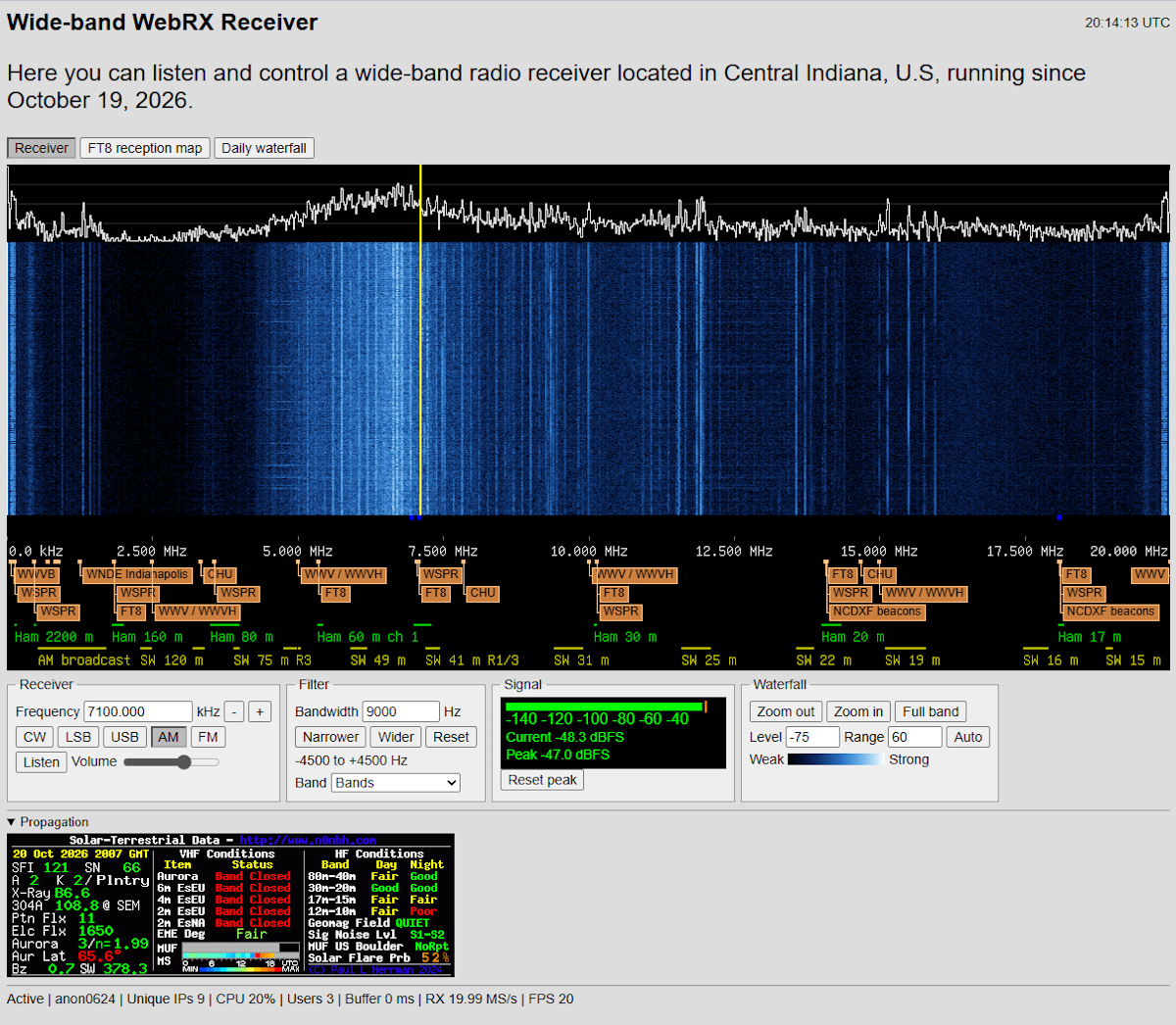
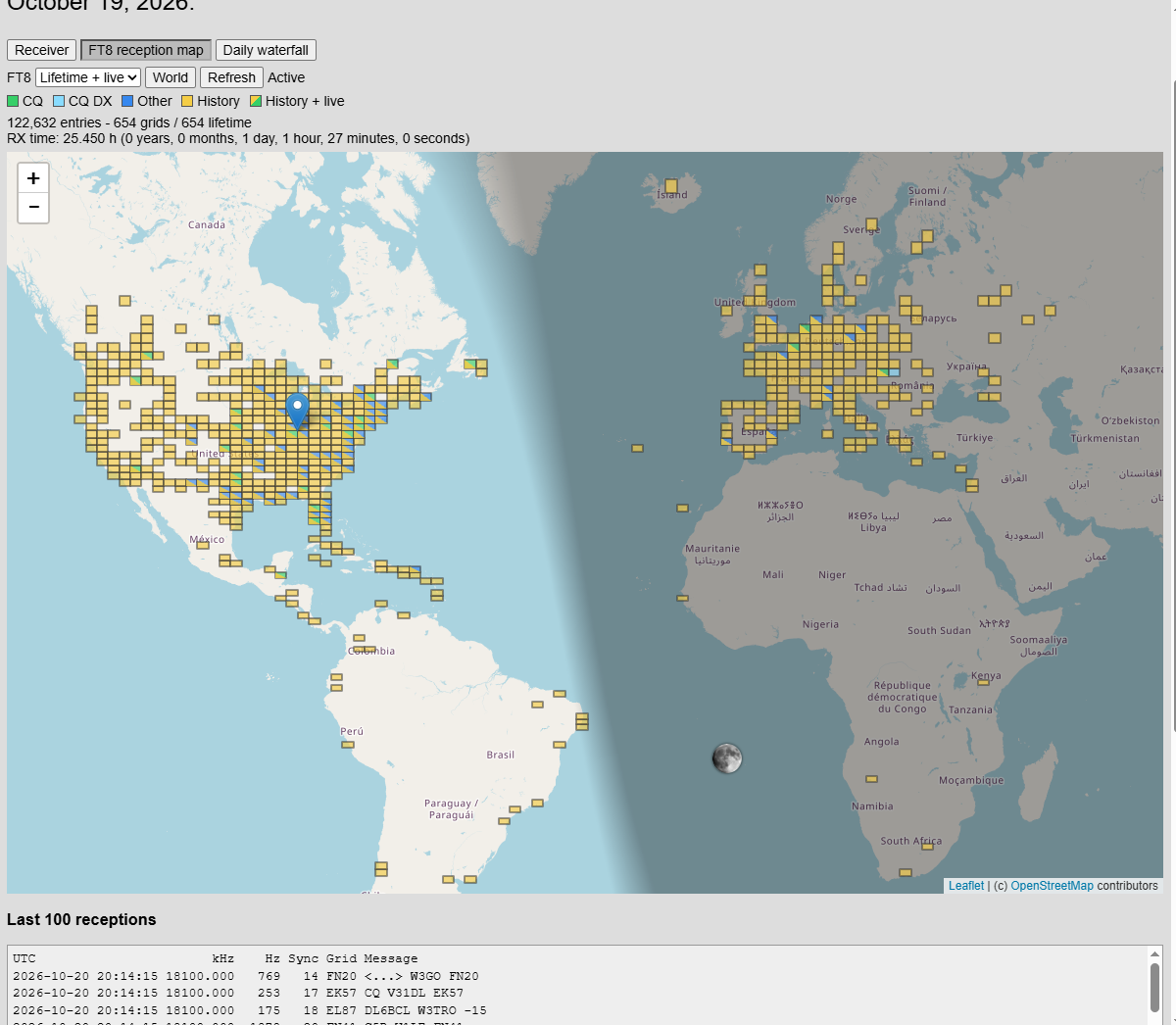
WebRX is an experimental SDR server written in C++ that I'm developing for listening to radio through a web browser, inspired by WebSDR and OpenWebRX. It features a live spectrum and waterfall, WebGPU-accelerated FFT processing on supported browsers, and FT8 decoding with a reception map across the FT8 frequencies within the receiver's bandwidth. It currently targets PlutoSDR hardware.

The source code isn't public yet, but you can try the live receiver . It's located in central Indiana and uses an active loop antenna connected to a heavily customized ADALM-Pluto SDR. Development is ongoing, so occasional bugs and downtime are expected.

WebRX screenshots

Custom Pre-Amplifier

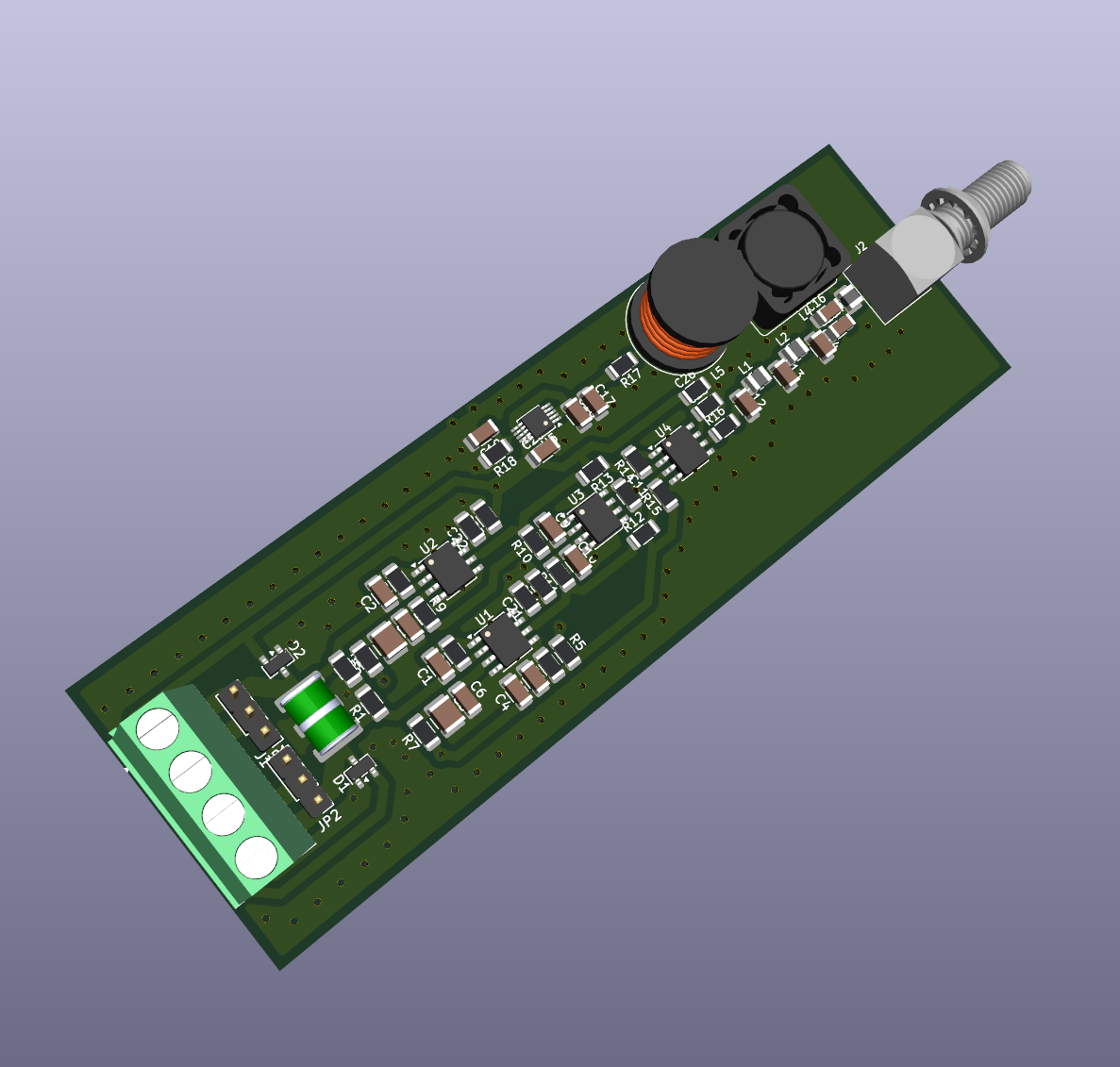
I designed this ultra-low-noise pre-amplifier to improve radio reception with my SDR setup. It is intended for use with a magnetic loop antenna and a standard 50-ohm receiver input, targeting a frequency range of approximately 10 kHz to 30 MHz, covering VLF through HF.

The pre-amplifier is designed to provide high sensitivity, low noise, and wideband performance, making it suitable for receiving weak radio signals across a broad frequency range. It also incorporates measures to reduce interference from strong out-of-band signals.

The design focuses on maintaining good signal quality while remaining practical for everyday SDR use. Its expected frequency coverage is based on theoretical calculations, and real-world testing is still needed to verify its performance, noise characteristics, and effective range.

The preamp